Why Lake Baldwin's Dog Park Stayed Free, and What Paid Parking Means for Dinky Dock
November 12, 2026
If a city wanted to test paid parking at one of its parks, wouldn't it pick the busiest lot? On September 9, the Winter Park City Commission picked two, the Lake Baldwin Park dog park and Dinky Dock. Six days later the dog park was out. A full lot had nothing to do with it. A legal agreement signed with the City of Orlando in November 2002 did.
The pilot that's left is smaller, and the reason it shrank matters to anyone who parks at either spot. At Lake Baldwin, Winter Park and Orlando residents share the same access rights. Dinky Dock has no such agreement, so the pilot moved forward there and only there.
The pilot's main promise to residents was that Winter Park residents would keep parking free. That promise is what ruled out Lake Baldwin.
On September 15, the city announced that staff had become aware of the Baldwin Park Settlement Agreement. It was signed 24 years ago, in November 2002, and requires that Winter Park and Orlando residents "have equal access, on the same terms, to the parks owned by each entity in the Lake Baldwin area." Under that agreement, a fee that Winter Park residents skip would also have to be waived for Orlando residents. City Manager Randy Knight explained the decision in the city's announcement:
"If the pilot program went forward at Lake Baldwin Park, Orlando residents would need to be exempted from the parking fee the same as Winter Park residents, which administratively would be a larger undertaking. As a result of this document and input received from citizens, the city is removing Lake Baldwin Park from the Pay for Parking Pilot Program but will continue to move forward with the pilot at Dinky Dock."
The citizen input he mentioned came largely from the dog park's own volunteers. At the September 9 meeting, Erik Paul of Friends of Winter Park Dog Park spoke against the pilot. Orlando Weekly reported that he called Lake Baldwin "a regional gathering place" and named people from Baldwin Park, Audubon Park and Orlando who "stand alongside Winter Park residents as one community." He also told the commission that his volunteers, who live both in and outside Winter Park, help with upkeep at the park and should have been included before the proposal came forward. In WFTV's coverage, he called the fee "the wrong ask at the wrong time."
The 2002 agreement shows how the Lake Baldwin parks actually work. A Winter Park resident walking a dog there has the same footing as a neighbor from across the city line. That settled the question before anyone counted cars.
The pilot the Commission advanced in September and the ordinance now in front of it are different documents. The September version was a staff presentation that passed 5-0 to move into its next phase. The November version is a draft ordinance, numbered 3385-26.
| September 9 presentation | Draft Ordinance 3385-26 | |
|---|---|---|
| Locations | Dinky Dock and Lake Baldwin Park | Dinky Dock Park only |
| Rates | $2 to $3 an hour, or $20 a day | Minimum and maximum set by the city fee schedule, with dynamic pricing allowed between them |
| Enforcement | 8 a.m. to 8 p.m. | 8 a.m. to 8 p.m., Monday through Sunday |
| Resident parking | Free after registration, up to two vehicles per property | Annual digital permit tied to the license plate, free or discounted per household under the fee schedule |
| Grace | Two to three weeks of warning flyers before citations | First 10 minutes of any visit free |
| Start | Six-month pilot | Six-month pilot, anticipated spring 2027 |
The September dollar figures were staff estimates. The draft ordinance leaves the actual rates to the city's fee schedule, which the commission sets separately, and the staff report says outright that "the ordinance does not include Baldwin Park as part of the pilot locations." Citation amounts also go to the fee schedule.
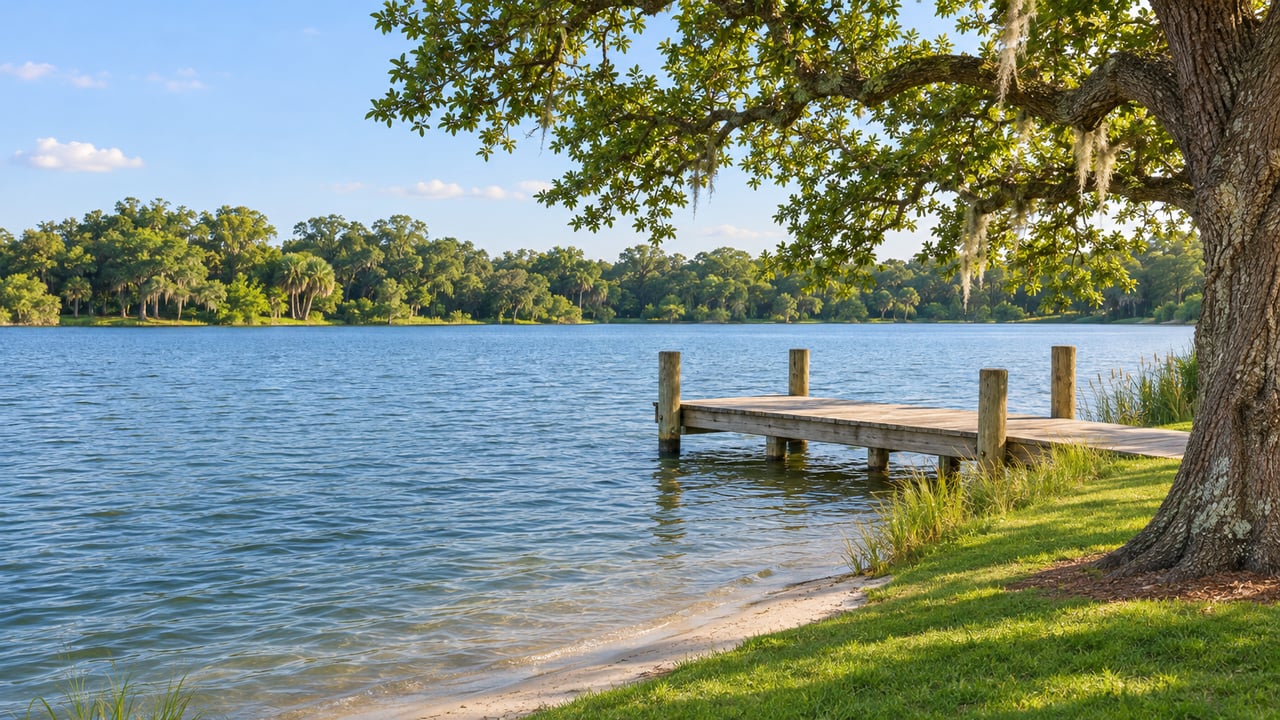
Dinky Dock Park sits on Ollie Avenue near Rollins College. It's open from 8 a.m. until dusk, swimming is allowed, and it has one of the city's public boat ramps onto the Winter Park Chain of Lakes. The city's Dinky Dock Park page already describes the ramp and trailer spaces as first come, first served, and says that once the trailer spaces fill, "parking will have to be secured offsite." Canoes, kayaks and paddleboards launch free. Motorboats need a permit, and the city's boating page lists the daily permit at $6.
That permit covers the boat. The parking pilot charges for the car. The draft ordinance doesn't treat a boat permit as a parking pass, and it doesn't set separate rules for trailers. Someone launching from Dinky Dock could end up needing both a boat permit and a parking permit, and a resident would need to register for the parking side to keep it free.
The draft says city lots, Dinky Dock included, "experience high demand." Staff gave the commission another reason for choosing the site. Orlando Weekly reported that staff believed paid parking at these parks was less likely to push drivers onto nearby residential streets. Kyle Dudgeon, the city's economic development assistant division director, said that outcome was still possible: "That's not impossible for it not to happen." For the blocks around Ollie Avenue, the pilot will show whether he was right.
The draft ordinance sets up an annual digital permit linked to a license plate. Residents won't get a sticker or a hang tag. Based on the draft and the September presentation, registration works like this:
Visitors will pay without cash, by app, QR code, phone call or text. Staff is still choosing the vendor. In September, staff said the transaction fee of 25 to 35 cents would be paid by the parker. If you're bringing out-of-town guests to Dinky Dock for a swim or a paddle, they'll be the ones paying once the pilot starts. A quick stop under 10 minutes will still be free for anyone.
Winter Park's September presentation pointed to Maitland's Fort Maitland Park as an example of a nearby city that already charges for parking. Maitland's current facility page for Ft. Maitland Park charges only boat trailers. Trailer parking is free on weekdays and $25 a day on Saturday and Sunday, and car parking is free all week. Maitland residents who buy the annual motorized boat pass get a sticker for free trailer parking.
So Maitland charges by the trailer on weekends, while Winter Park's draft charges by the car every day from 8 a.m. to 8 p.m. Both cities exempt their own residents in some form. Maitland ties the exemption to a boat pass. Winter Park ties it to a household's address.
Ordinance 3385-26, "Establishing a Paid Parking Pilot Program," was on the City Commission's November 11 agenda for first reading. The agenda and attachments are posted on the city's CivicClerk portal. A first reading isn't final approval. The city's calendar shows a work session on November 19 and the next regular Commission meeting on December 9. Staff expects the six-month pilot to start in spring 2027.
The bigger question is what happens after the pilot. In September, Commissioner Elizabeth Ingram asked whether the program could expand to other parks or other parts of the city. Orlando Weekly reported that staff said this would be decided later, and Dudgeon said "the scalability of it is, I don't think, as important today." The same article tied the pilot to budget season and to the property tax revenue cities stood to lose under Amendment 3. That's the same pressure behind the property tax questions we covered last month. Commissioner Craig Russell said tracking how people use the parks would "give us good indicators on how to use this most effectively, you know, for our residents."
Any future expansion runs into the same rule that decided this round. Lake Baldwin stays free for Winter Park and Orlando residents alike, on the same terms, because of the 2002 settlement agreement. Dinky Dock has no comparable agreement, which is why it is the only site left in the pilot.
This post is general information about a proposed city ordinance, not legal advice. Confirm current permit rules and fees with the City of Winter Park before you rely on them.
Questions about how city decisions like this one affect the streets around a home you own or are considering? Shirley Jones follows Winter Park's commission agendas closely and is glad to talk through what they mean for your block. Schedule a free consultation.
Stay up to date on the latest real estate trends.
Shirley’s consistent success in sales isn’t just numbers—it’s a reflection of client trust, sharp negotiation skills, and a passion for helping people move forward. Your goals are her mission.