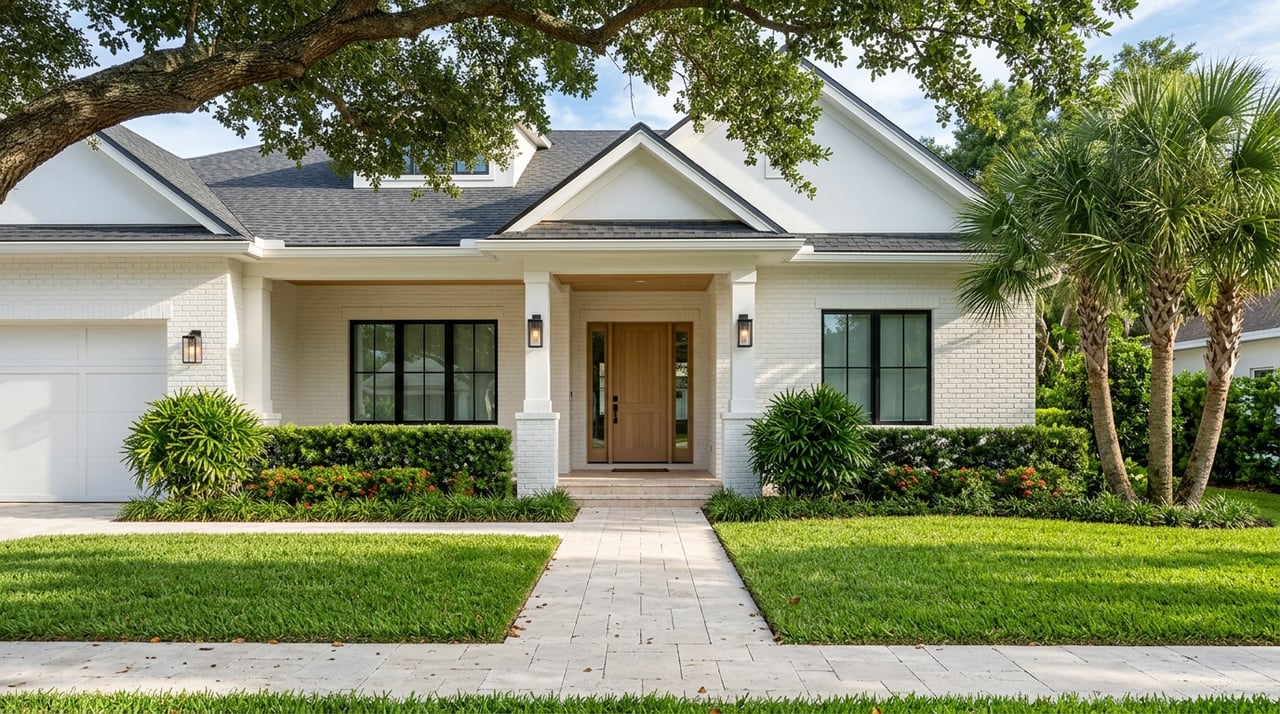
A Winter Park Micro Market Guide for Luxury Homes
June 4, 2026
June 4, 2026
Wondering why one Winter Park luxury home feels like a completely different market from another just a few streets away? You are not imagining it. In Winter Park, price, lifestyle, and even ownership considerations can shift sharply based on whether you are looking at lakefront property, a historic district, or a newer planned enclave. If you want to buy or sell wisely here, it helps to understand how these micro-markets work. Let’s dive in.
Winter Park is a compact city of about 10 square miles with more than 30,000 residents, but it does not behave like one uniform luxury market. The city is shaped by Park Avenue, a chain of lakes, and several historic districts, which creates very different pockets of value and demand.
Current market data shows just how wide that spread can be. In March 2026, Winter Park posted a median listing price of $565,500, yet the 32789 ZIP code was at $1,397,500 while 32792 was at $392,400. That gap is a strong reminder that in Winter Park, the address alone does not tell the full story.
For buyers and sellers, this means broad citywide averages are only a starting point. To price a home correctly or evaluate value with confidence, you need to look at the specific micro-market, not just the city name.
Winter Park’s lakes are one of the city’s strongest luxury drivers. The city identifies lakes such as Virginia, Osceola, Maitland, Killarney, Knowles, Spier, Mizell, Sue, and Sylvan, with the Chain of Lakes standing out for public access, visibility, recreational use, and concentration of lakefront homes.
Within that chain, each location has its own appeal. Lake Virginia sits near Rollins College, the Scenic Boat Tour, and Dinky Dock Park. Lake Osceola is the middle lake in the chain, and Lake Maitland is the lower-most lake, giving each corridor a slightly different feel and use pattern.
What matters most is that lakefront value is about more than simply being on the water. Frontage, lot size, lot shape, orientation, and practical boating access all help shape what buyers are willing to pay.
If you are considering a Winter Park waterfront home, several property-specific details can affect value and daily use:
The city also has boating rules that matter in real life. On the Chain of Lakes, motorboats require a city permit, boats must be under 24 feet, and no boat wider than 8 feet may enter a canal. Those details may seem small at first, but they can shape how you use the property and how future buyers view it.
The price difference can be dramatic. A notable example is 1461 Via Tuscany, which sold in 2024 for $9.25 million on 1.57 acres in a 1919 estate on Lake Maitland. Sales like that show why waterfront property in Winter Park often acts as a separate luxury submarket rather than just a home with a premium feature.
Winter Park’s historic core is wider than Park Avenue itself. The city identifies historic districts including College Quarter, East Virginia Heights, Downtown, and Interlachen, and it has recorded more than 700 historic structures, about 7% of residential dwellings.
This part of Winter Park includes both grand estates and smaller bungalow areas. Many homes trace back to the late 1800s, with neighborhoods further shaped by the 1920s land boom. That layered history is a major reason buyers are drawn to the area.
At the same time, the historic core comes with its own rules and decision points. Buyers are often balancing architecture, walkability, lot size, renovation potential, and long-term compatibility with district standards.
Historic designation does not freeze a property in place, but it does affect the process. In Winter Park, the Historic Preservation Board may review additions and new construction for compatibility, and historic designation functions as an overlay to zoning.
That said, the city makes clear that historic designation does not affect property taxes. It also does not require new construction to copy historic architecture exactly, as long as the design respects the surrounding district pattern.
For buyers, that means you should think beyond charm alone. It is wise to ask whether you want an original home, a fully renovated property, or a newer infill home that fits within the district context.
Inventory in the historic core can be limited and highly segmented. One example at the upper end is 637 N Park Ave, which sold for $3.8 million in February 2026 on a 3,049-square-foot lot.
In nearby historic pockets, the supply can be especially thin. Interlachen Avenue Historic District had only five homes for sale in recent market data, while nearby Virginia Heights showed a $1.7 million median price. That combination of limited inventory and strong buyer interest helps explain why this micro-market often feels more competitive and nuanced than broader Winter Park numbers suggest.
The city’s Park Avenue Refresh Project also points to ongoing public investment in the core. For buyers and sellers alike, that reinforces the long-term importance of this area within the city.
Not every luxury buyer in Winter Park wants historic architecture or lakefront complexity. Some prefer newer systems, more open layouts, and the convenience of planned-community living. That is where newer enclaves become especially important.
Windsong is one of the clearest examples. Recent market data showed five active listings in April 2026, and it sits within the higher-priced 32789 market, where the median listing price was $1,397,500.
What makes Windsong especially useful as a case study is that it has its own internal sub-pockets, including Preserve Point, Lakeside, North Shore, Estates, Elizabeths Walk, and Knowles Place. In other words, even a newer neighborhood can contain several micro-markets of its own.
Newer communities often appeal to buyers who want practical advantages along with a premium address. Common draws include:
A recent example at 1813 Harland Park Dr illustrates that profile. The home was built in 2013 and included 4 bedrooms, 3.5 baths, 3,551 square feet, a pool, spa, game room, community security, and a $302 monthly HOA on a 0.25-acre lot.
That is a very different value proposition from a 100-year-old home near Park Avenue or an estate on the chain of lakes. It shows how Winter Park can serve buyers with different priorities, even within the same general price tier.
Winter Park also includes planned neighborhoods that are not brand-new but still differ from its historic districts and waterfront streets. Waterbridge is a useful example.
The city notes that Waterbridge was one of Winter Park’s first PURD developments in 1979. It includes a standard single-family section, 46 zero-lot-line lots, 42 townhouse units, and open space and recreation areas.
That mix matters because planning era and lot type shape how a neighborhood lives day to day. If you are comparing homes across Winter Park, these details can affect maintenance expectations, privacy, outdoor space, and resale appeal just as much as square footage.
If you are relocating, moving up, or preparing to sell, it helps to evaluate each area through a practical lens. The best fit is not always the highest price point. It is the one that aligns with your goals, lifestyle, and ownership preferences.
Here are a few smart questions to ask as you compare micro-markets:
These questions matter because the true cost of ownership often goes beyond the list price. In Winter Park especially, two homes with similar prices may offer very different long-term experiences.
Winter Park rewards precise, neighborhood-level analysis. A buyer comparing lakefront, historic, and newer enclave properties is not really comparing like with like. A seller trying to position a home in one of these areas also needs a strategy built around the micro-market, not generic citywide averages.
That is why local context matters so much. Understanding district overlays, lake rules, lot characteristics, and neighborhood segmentation can help you make a more confident decision and avoid expensive assumptions.
If you are considering a move in Winter Park, the smartest first step is to narrow the conversation from “the city” to the specific pocket that fits your goals. For tailored guidance on buying, selling, or relocating within Winter Park’s luxury micro-markets, connect with Shirley Jones Realtor.
Stay up to date on the latest real estate trends.


Shirley’s consistent success in sales isn’t just numbers—it’s a reflection of client trust, sharp negotiation skills, and a passion for helping people move forward. Your goals are her mission.